
Temporary Event Staff: What Actually Costs Less?
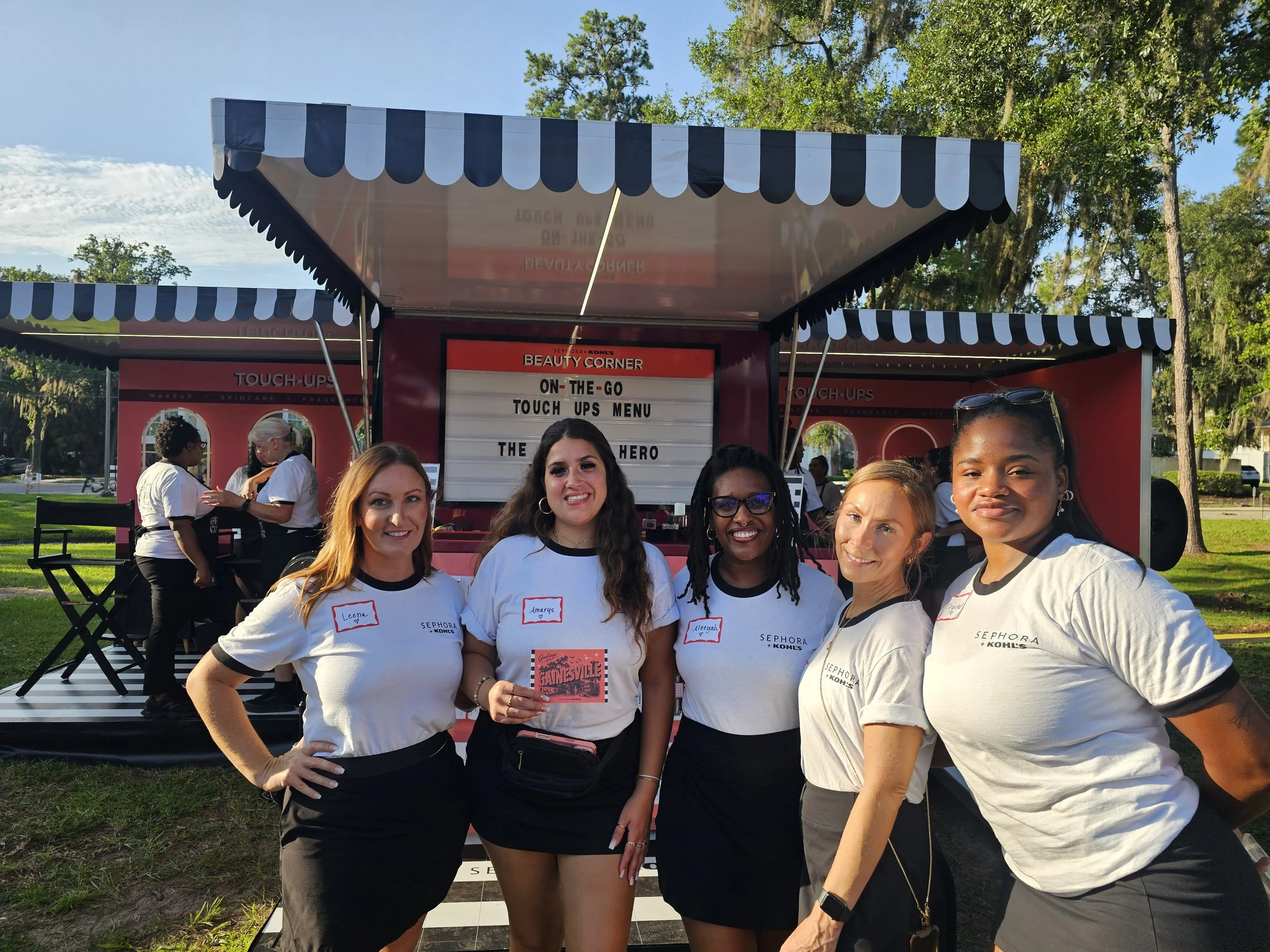
Our event staff helping bring the Sephora at Kohl’s experience to life at Gainesville, Florida
Hiring temporary event staff can look like the budget-friendly choice. Find people locally, agree on an hourly rate, fill the schedule, and move on. For a small, simple event, that approach may possibly work just fine. However, for brand teams, festival and event producers, trade show exhibitors, and event staffing companies running multi-market programs, the real cost is rarely limited to an hourly wage. It includes the time, risk, payroll work, training, replacements, and operational scrambling that can happen when the staffing plan is not built for live events.
That is where the difference between temporary event staff and a dedicated staffing agency becomes clear. One option may be less expensive at the start. The other is often less expensive by the time the event is over.
Where Temporary Event Staff Come From
Temporary event staff can come from a few different places. Some companies hire directly through job boards, referrals, social media, or local staffing groups. Others use a general temp agency to find people available for short-term assignments. And many turn to a dedicated event staffing partner that specializes in putting trained, customer-facing teams on the ground.
There is no single right answer for every event. A small local office event with straightforward responsibilities may not need a nationwide staffing operation behind it. If the job is simple, the schedule is predictable, and an internal team has time to manage staff directly, direct hiring or a general temp agency can be a practical solution.
Live events are different when the stakes rise.
A trade show booth needs staff who can greet attendees professionally, manage lead capture, explain the basics of a product, and know when to hand a conversation to a sales rep. A festival team may need to manage guest flow, work through long shifts, navigate venue procedures, and represent the client well in a crowded environment. A touring program may require staff, drivers, vehicles, routing, warehousing, and payroll support across several markets.
At that point, the question is no longer just where to find temporary event staff. It is whether the staffing model can hold up when the program gets complicated.
The Real Event Staffing Cost
The lowest rate on a spreadsheet is not always the lowest event staffing cost.
A direct hire may charge less per hour than a dedicated staffing agency. But if that person cancels the night before an event, someone still has to find a replacement. Someone has to confirm the new person understands the role, knows where to park, can get credentialed at the venue, arrives in the right uniform, and is ready before attendees walk in. That “someone” is often the producer, field marketing manager, trade show coordinator, or account lead already responsible for everything else.
A dedicated event staffing agency is not only providing people for the schedule. It is providing a process for sourcing, confirming, briefing, employing, and supporting those people. That process matters because staffing issues rarely stay contained. One missing registration staffer can mean longer lines. One unprepared brand representative can mean missed leads. One payroll mistake can create a much larger administrative headache after the event. The goal is not to eliminate every possible event-day problem. Anyone who has worked live events knows plans change. The goal is to have a partner that can respond without turning every small issue into a client-side emergency.
Hidden Costs of No-Shows and Untrained Staff
No-shows are an obvious problem, but they are not the only hidden cost of a loose temporary event staffing plan.
Consider a conference registration shift. A staff member arrives late, has not worked the venue before, and is unclear on the check-in process. The team needs to pause and train them while attendees wait. A producer steps in to answer basic questions. The registration area becomes less efficient, and the day starts with pressure that could have been avoided. The cost is not just the late staffer’s missed time. It is the internal time spent managing the problem. It is the potential impact on the attendee experience. It is the added stress placed on the people responsible for vendors, programming, clients, speakers, equipment, and every other moving part.
Training can create the same issue. Customer-facing event work requires more than showing up. Staff need to understand the assignment, the schedule, the client’s expectations, and the level of professionalism the event requires. For a brand team, that can mean knowing how to engage consumers without being pushy. For a trade show exhibitor, it can mean understanding the difference between collecting a badge scan and qualifying a meaningful lead. For a festival producer, it can mean staying calm, helpful, and alert during a fast-moving public event.
As Encore Nationwide, we have spent more than 25 years staffing live programs, which means the team understands what strong event staff need before they get to site: clear communication, proper preparation, and accountability. We have seen just about every staffing challenge there is. We have done it all, literally.
What’s Included in an Agency Day Rate
An agency day rate may seem higher than paying one worker directly. But it is important to compare like with like. A direct hourly rate usually reflects one person’s time. An agency rate often reflects the infrastructure behind that person: recruiting, screening, staff communication, scheduling, payroll, timekeeping, employment administration, insurance, compliance support, and replacement planning. That matters because a live event does not give teams much room for trial and error. When doors open, the team has to be there. When a shift starts at 6:00 a.m., there is not time to begin sourcing staff at 5:45.
With a dedicated agency, the value is in the work happening before the first staff member checks in. Staff are sourced for the role. Availability is confirmed. Instructions are communicated. Schedules are managed. Payroll is handled after the shift. If a change happens, there is an experienced team working to solve it. Encore’s W-2 staffing model is another part of the equation. Rather than placing worker-classification, payroll, insurance, and related employment responsibilities on the client, Encore employs staff as W-2 workers. That gives clients a clearer, more structured way to staff programs while reducing the administrative burden that can come with managing temporary teams directly.
For companies that already have their own event staff but do not want to manage the employment side of the work, Encore also offers outsourced event payroll. That can help organizations take payroll processing, workers’ compensation, insurance, tax documentation, and compliance administration off their internal to-do list.
When a Temp Agency Is Fine and When It Isn’t
A general temp agency can be a good fit when the assignment is local, uncomplicated, and easy to supervise. If a company needs a few extra hands for a basic shift and has an experienced internal manager on site, a general staffing solution may be all that is needed.
The situation changes when the event becomes more visible, more complex, or more geographically spread out.
A brand running a national consumer program needs consistent staffing standards from market to market. A producer managing a festival needs a partner that understands the pace of public events and can support a large number of roles. A trade show exhibitor may need polished staff who are comfortable speaking with attendees, collecting leads, and representing the company professionally.
Then there are programs that require more than staff.
A roadshow may require CDL drivers, vehicle support, route planning, storage, shipping coordination, and warehousing. A large event may involve equipment movement, load-in and load-out crews, permits, or timing that has to work across several vendors. Trying to coordinate separate providers for every part of the operation can create more handoffs and more opportunities for things to fall through the cracks.
Encore is built to support the whole operation, not just fill a schedule. That is the difference between hiring temporary event staff and working with a nationwide event staffing, logistics, and payroll partner.
How Encore Nationwide Prices Programs
We prices each program around the actual scope of work. A one-day trade show assignment in a single market is different from a multi-city tour, a large festival, or a nationwide staffing program with payroll and logistics requirements.
Pricing typically reflects factors such as:
Number of staff, markets, roles, and shift hours
Required experience, training, uniforms, and on-site management
Travel, lodging, per diem, and overtime needs
W-2 employment, payroll, insurance, and compliance requirements
Logistics needs, including CDL drivers, warehousing, routing, vehicles, or fulfillment
This approach gives clients a more accurate picture of total event staffing cost before the program begins. Instead of choosing a low rate and discovering the real operational costs later, brand teams and producers can plan for the support the event actually needs.
The most affordable staffing decision is not always the one with the lowest number beside it. It is the one that protects the guest experience, keeps internal teams focused on their real jobs, and gives the program the support to keep moving when live-event variables show up.
We brings nationwide temporary event staffing, logistics, and outsourced payroll under one W-2 partner. Fewer handoffs. Less client-side administration. More confidence that the people representing your program are ready when it counts.
