
Event Logistics Services Explained: What a Full-Service Partner Handles For Your Tour
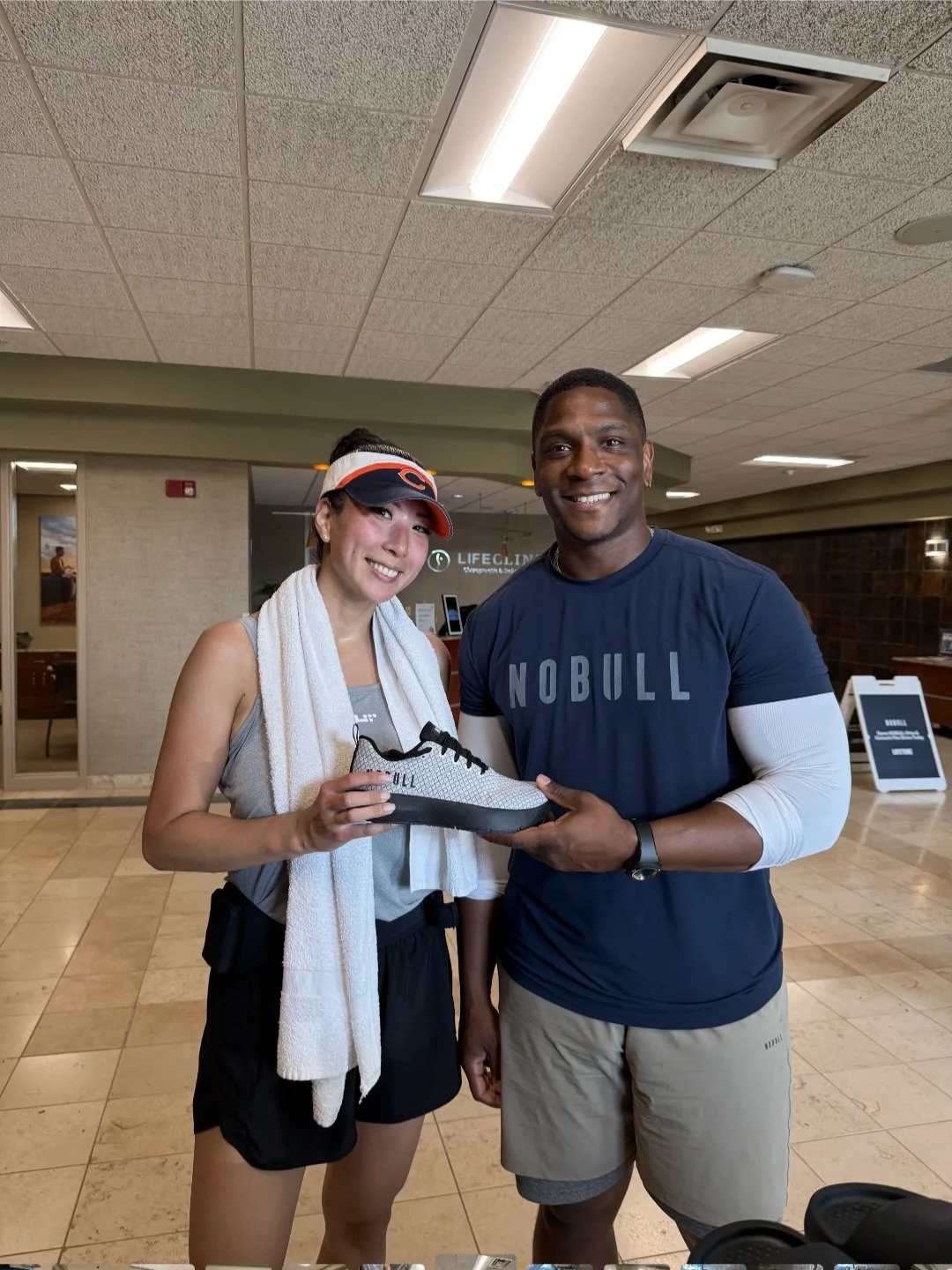
Our team supported NOBULL at Life Time Fitness locations across Chicago, assisting with shoe try-ons, product demos and brand engagement.
A successful tour has a lot more moving parts than a wrapped vehicle and a great idea. Every stop depends on the details behind the scenes: where equipment is stored, who drives it, which permits are required, how staff get paid, where the team sleeps, and what happens when the schedule changes halfway across the country.
Professional event logistics services help bring all those moving parts together.
For brands and event producers, a full-service logistics partner manages the operational side of a mobile program so that the team can focus on the audience, the client, and the experience that is happening on-site. A reliable event logistics company keeps every part of a tour on track. They coordinate transportation, staff, paperwork, inventory, schedules, and compliance to ensure each stop runs as planned.
Encore Nationwide has spent more than 25 years supporting events, roadshows, festivals, and large-scale programs nationwide. With logistics, W-2 staffing, payroll, and operational support under one roof, we help clients reduce the number of vendors involved in each stop we the number of things that can go wrong.
If you need a refresher on the fundamentals, start with our guide, What Is Event Logistics? Let’s Break It Down. Then keep reading for a closer look at what full-service event logistics services can handle for your tour.
Drivers and DOT Compliance
A mobile tour cannot run without reliable transportation. Depending on the footprint, that may mean a single branded vehicle, a fleet of sprinter vans, box trucks, trailers, or CDL-operated vehicles moving equipment and personnel from market to market.
A full-service tour logistics company helps match the right vehicle and driver to the job. That includes sourcing qualified CDL drivers when needed, confirming licensing requirements, coordinating vehicle schedules, and managing the day-to-day logistics of getting a tour safely to its next destination.
DOT compliance is a major part of that responsibility too. Commercial transportation comes with rules around driver qualifications, vehicle inspections, hours of service, documentation, and safety. Overlooking those requirements can create delays, expose a program to risk, or take a vehicle off the road when it is needed most.
Experienced mobile tour logistics teams understand that transportation is not a last-minute production task. It is an operational system that needs to be planned before the first market goes live.
Encore Nationwide helps clients build the right system from the start. Depending on the tour, the plan might include a dedicated driver, vehicle coordination, DOT support, or multi-city routing. The logistics team keeps each stop organized and the tour on schedule.
Warehousing, Shipping and Fulfillment
Most tours have more inventory than fits neatly inside a vehicle. Product samples, uniforms, signage, tents, tables, technology, giveaways, display materials, printed collateral, and replacement supplies all need a place to go before, during, and after the program. That is why warehousing is a core part of event logistics services. Warehousing is a core part of event logistics services because of this.
A logistics partner can receive shipments, count inventory, store materials, prepare kits, ship assets to individual stops, manage returns, and track what teams are using the field. This becomes especially important for tours with recurring events, multiple teams, or long schedules where supplies need to be replenished throughout the program.
Without organized fulfillment, field teams might arrive at an event missing key materials or carrying supplies they do not need. A missing banner, low product supply, incorrect uniform shipment, or delayed equipment case can throw off the entire event. Each team needs the right materials, delivered on time and ready to use.
The goal is simple: each team should receive what it needs, when it needs it, in usable condition.
A full-service event logistics company also gives clients better visibility into their inventory. Instead of wondering where assets are stored or whether materials reached the next market, clients have a central operations partner managing the movement of supplies. This helps reduce emergency shipments, last-minute scrambling, and unnecessary costs.
For a deeper look at Encore’s operational capabilities, visit our event logistics services page.
Permits and Licenses
A tour may be ready to roll from a staffing and equipment standpoint, but it can still be stopped by paperwork. Permits and licenses vary by city, venue, event type, vehicle size, footprint, sampling activity, and local regulations. A program operating at a festival may have different requirements than one parked outside a retail location, attending a convention, or traveling through several downtown markets in one month.
Thus, a full-service logistics partner helps identify the permits, licenses, certificates, and approvals needed for each stop. This may include vehicle permits, parking permissions, local business requirements, health-related documentation for food or beverage sampling, and venue-specific requirements.
The challenge is not just completing forms. It is tracking deadlines, understanding local differences, and making sure approvals are secured early enough to avoid last-minute disruptions. For brands and event producers, permit management is often one of the least visible but most important parts of mobile tour logistics. When it is handled correctly, the event opens on time and the audience never sees the work behind it. When it is missed, the consequences can be immediate, resulting in: a delayed setup, a prohibited activity, a vehicle that cannot park where planned, or a stop that needs to be reworked on-site.
Our logistics team helps clients manage the operational details that are easy to underestimate until they become a problem.
Tour Routing
A tour route has a domino effect on travel time, staffing, transportation costs, vehicle availability, setup windows, rest periods, shipping needs, and the schedule for every stop that follows.
A strong tour routing plan considers the distance between markets, event dates, venue access hours, traffic patterns, loading requirements, hotel availability, and the time needed for teardown and travel. It also accounts for the fact that plans change. Weather, road closures, client revisions, event cancellations, and venue issues can all require a schedule to shift quickly. That is why mobile tour logistics should be managed by people who understand the full operational picture.
A tour logistics company can help create efficient routes before the program begins, then adjust the schedule as real-world conditions change. The goal is not simply to make the route look efficient on paper; it is to make sure people, vehicles, and assets can realistically get from one stop to the next without creating unnecessary risk or burnout.
We have supported nationwide programs for more than 25 years, which means we understand how quickly small routing decisions can create larger operational problems. An extra few hours of driving, a tight load-in window, or an overlooked city restriction can affect the next several days of a tour.
As a result, planning ahead matters. So does having one team that can react when the plan needs to change.
Travel and Per Diems
Tour staff need clear travel arrangements, lodging details, reimbursement guidance, per diem information, and support when plans change. Managing travel across multiple markets can be time-consuming, particularly when a program includes drivers, brand ambassadors, managers, production staff, or specialized teams. Flight delays, hotel changes, vehicle issues, and extended event days can affect staffing coverage and payroll. A full-service event logistics partner can coordinate travel plans and per diems in a way that makes expectations clear for everyone involved. This helps staff arrive prepared and helps clients maintain better control over expenses.
Per diems are especially important on longer programs. They provide staff with a defined daily allowance for eligible meals and incidental expenses, rather than leaving reimbursement decisions unclear or inconsistent. Clear policies protect the team and simplify expense management for the client.
Our W-2 staffing model adds another layer of operational control. Rather than asking a brand or producer to manage worker classification, payroll administration, and related responsibilities across markets, Encore can handle staffing and payroll through one accountable partner.
That setup is valuable when the tour is moving quickly. The fewer disconnected systems a team has to manage, the easier it is to keep every stop organized.
Why Staffing and Logistics Under One Roof Reduces Failure Points
Most operational problems happen during handoffs between teams. For example, the staffing agency might assume the logistics provider has handled the uniforms, while the warehouse expects the field manager to bring replacement supplies. At the same time, the transportation vendor might still be working from an outdated event schedule, and payroll might operate separately from the staffing schedule. Without clear communication between these teams, no single team has the complete picture. That is where a fragmented vendor model creates risk.
When staffing and logistics are managed separately, every additional vendor creates another communication gap. Messages get delayed, responsibilities become unclear, and small issues can turn into on-site failures. A late shipment can affect staffing. A route change can affect payroll. A missing permit can change the entire staffing schedule.
As Encore Nationwide, we bring those functions together.
As a nationwide event staffing company with logistics and outsourced payroll capabilities, Encore can support the whole operation: recruiting and scheduling W-2 staff, coordinating drivers and vehicles, managing warehousing and fulfillment, supporting route planning, handling travel details, and helping keep the tour compliant.
That does not mean every client needs every service. Some programs need staffing plus payroll. Others need a logistics-heavy partner for vehicles, drivers, warehousing, and routing. Larger tours may need the full operational package.
The advantage is having one experienced team that understands how each moving part affects the others.
With 25+ years in the industry and one of the largest W-2 event staff databases, We have done it all, literally. From multi-market tours to large events and festivals, we help brands and producers run programs with fewer vendors, clearer accountability, and stronger on-the-ground execution.
Your audience sees the final event. Encore manages what it takes to get there.
Keep Your Tour Moving
If your program needs drivers, warehousing, fulfillment, routing, permits, payroll, or trained field staff, work with a partner built to handle the full operation.
What part of your tour operations currently involves the most separate vendors or handoffs?
