
How to Hire Event Staff: A Brands Buyer’s Guide
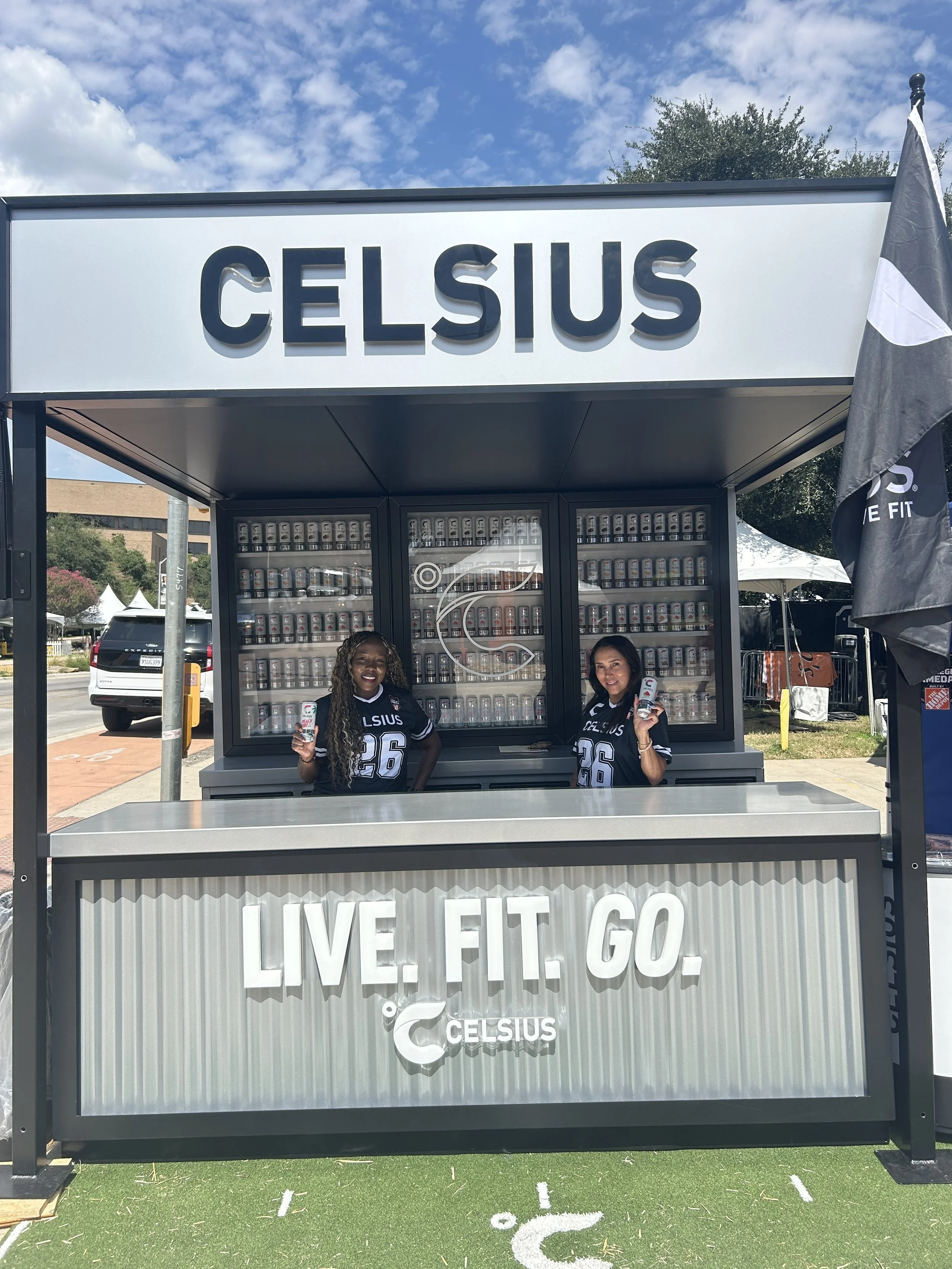
CELSIUS Brand Ambassadors supporting an on-site activation in Austin, Texas.
Hiring event staff is one of the most important operational decisions a brand or event producer makes. The right team can keep registration moving, support guests, represent your company, and help an event run safely and on schedule. The wrong staffing model can create no-shows, long lines, payroll problems, and unnecessary pressure on your production team.
This guide explains how to hire event staff for conferences, trade shows, festivals, tours, pop-ups, and other large events. It covers the roles you may need, how to compare staffing providers, what to include in a brief, and which questions to ask before signing an agreement.
What Event Staff Covers
Event staff includes far more than brand ambassadors. Depending on the event, your team may need guest services, registration support, product specialists, supervisors, hospitality workers, or logistics crews.
Brand ambassadors are often the most visible members of a staffing team. They may welcome guests, explain a product, distribute samples, support lead capture, conduct demonstrations, or direct attendees to another area. Because they represent the client in public, communication skills and professionalism are just as important as availability.
Registration staff manage the first operational touchpoint for many conferences and trade shows. Their responsibilities may include checking in guests, scanning badges, printing credentials, answering basic questions, and referring complex issues to a registration lead. Staffing should be based on arrival patterns and check-in windows, not simply total attendance. A 1,000-person event with staggered arrivals may need a different plan from a 1,000-person event where most guests arrive within one hour.
Trade show booth staff may welcome visitors, explain products, qualify prospects, schedule meetings, or keep the booth organized. Product demonstrators need to understand the product and follow approved talking points. Hosts and emcees require confidence, clear delivery, and the ability to follow a run of show.
Other roles can include directional staff, room monitors, VIP hosts, samplers, street teams, costume performers, event managers, tour managers, drivers, and load-in or load-out crews. Encore Nationwide’s event staffing services cover a wide range of these positions, including brand ambassadors, event managers, tour staff, product specialists, regional managers, hosts, emcees, and trade show staff.
For a large or complex program, do not overlook supervision. A field manager or team lead can manage attendance, staff questions, break schedules, dress-code checks, and event-day communication. This gives the producer a dedicated operational contact instead of requiring the client team to manage every individual worker.
Choosing an Event Staffing Model
The main hiring options are a W-2 event staffing agency, a 1099 marketplace, or direct hiring. Each model affects cost, control, compliance, and the amount of work your internal team must manage.
A W-2 staffing agency employs the staff members and manages employment-related responsibilities. These may include payroll, tax withholding, workers’ compensation, insurance, onboarding, timekeeping, scheduling, and replacement coverage. This structure is often useful for multistate programs because the agency can manage the employment process across the markets where staff are working.
Encore Nationwide states that its event staff are W-2 employees rather than 1099 contractors. That distinction matters because event workers are usually trained, scheduled, directed, and assigned specific duties by the client or staffing provider.
A 1099 marketplace may offer quick access to available workers, but the buyer should understand exactly what the platform handles. The IRS evaluates worker classification using factors related to behavioral control, financial control, and the relationship between the parties. Behavioral control includes whether the business directs what the worker does and how the work is performed. Financial control can include how the worker is paid and whether expenses are reimbursed.
The Department of Labor also updated its employee-versus-independent-contractor guidance under the Fair Labor Standards Act, with the final rule taking effect on March 11, 2024. Because classification requirements can vary according to the circumstances and jurisdiction, brands should ask providers to explain their model in writing and consult qualified legal or tax professionals when necessary.
Direct hiring may seem straightforward for a small local event, but it transfers administration to your team. Someone must handle contracts, employment paperwork, payroll, insurance, timekeeping, breaks, reimbursements, training, and no-shows. The hourly rate may appear lower, but the internal time and risk can increase.
Before comparing quotes, compare the responsibilities included in each model. A lower rate does not necessarily mean a lower total cost if your team must manage payroll, recruitment, replacements, or compliance separately.
Preparing a Staffing Brief
An accurate quote starts with an accurate brief. An agency needs more than the event date, venue, and headcount to understand the real scope.
Begin with the event basics: the event name, dates, city, venue, expected attendance, public hours, and access times. Then separate the headcount by role. For example, list registration staff, brand ambassadors, team leads, booth specialists, hosts, directional staff, and operations personnel individually.
A useful staffing plan also divides the event into operating zones. Registration, entrances, session rooms, hospitality areas, exhibit floors, activations, parking areas, and backstage spaces may all require different coverage. Assign a responsible lead to each zone and note when coverage is most important. This helps prevent a common planning error: having enough staff in total but too few people at the busiest locations.
Explain what each role will do. “Ten event staff” is not enough information if some workers will greet guests, some will operate scanners, and others will lift equipment or manage a queue. The responsibilities affect the skill level, training, supervision, and physical requirements involved.
The schedule should include call times, paid shift hours, training, rehearsal, breaks, load-in, and load-out. Include any early access requirements, security checks, credential collection, or venue-specific onboarding. If the event has predictable arrival surges, share those time windows so the agency can recommend coverage around the busiest periods rather than spreading staff evenly across the day.
Training should be treated as part of the operation, not an afterthought. Provide product information, approved messaging, frequently asked questions, escalation instructions, dress-code details, and the event floor plan. Clarify who conducts the briefing and whether staff must complete a test, rehearsal, or certification before arriving.
You should also describe the audience and environment. Tell the agency whether the event is indoors or outdoors, whether staff will stand for long periods, whether they will walk between areas, and whether they may encounter heat, cold, crowds, stairs, or lifting requirements.
Accessibility and language needs should appear in the brief as well. Staff may need to communicate with international attendees, assist guests with mobility needs, understand accessibility procedures, or support an inclusive registration process. Sharing these requirements early helps the agency recruit appropriately and allows the producer to plan a better guest flow.
Appearance details should be equally specific. Share the dress code, branded apparel, grooming expectations, footwear requirements, sizing needs, and any costume or performance standards.
If the team needs product knowledge, technical expertise, language skills, public-speaking ability, driving experience, or previous festival or trade show experience, include those requirements at the beginning. Otherwise, an agency may recruit general staff for a role that actually requires specialized experience.
Finally, explain reporting expectations. You may need attendance records, photographs, lead counts, interaction totals, incident reports, staff feedback, or a post-event recap. Ask the agency to provide an itemized quote that separates staffing, management, training, travel, parking, uniforms, payroll, overtime, and other expenses.
When to Hire Temporary Event Staff
The right booking window depends on the event’s complexity, location, staffing volume, and role requirements.
For a small, straightforward local event, two to four weeks may be workable. Conferences and trade shows generally benefit from four to six weeks of planning. Festivals, national campaigns, tours, and large public events should often begin staffing conversations eight to twelve weeks ahead. Specialized or multistate programs may require several months.
Booking early gives the staffing partner time to recruit suitable people, confirm availability, complete onboarding, arrange training, and build replacement coverage. It also gives the client more time to approve uniforms, finalize scripts, prepare venue instructions, and resolve insurance or credentialing requirements.
Short-notice staffing may still be possible, but it can reduce the available talent pool. You may have fewer options for bilingual workers, product specialists, hosts, supervisors, or staff with experience at a particular venue. Rush recruitment can also lead to additional costs.
The best approach is to contact an agency as soon as the date and location are confirmed, even if the final brief is still being developed. A good staffing partner can help identify missing information and refine the staffing plan before recruitment begins.
Red Flags to Watch For
The vetting process should reveal how a staffing provider operates when conditions are normal, and how it responds when they are not.
Be cautious if a provider cannot clearly explain whether staff are W-2 employees or independent contractors. Insurance and workers’ compensation should also be documented, particularly when staff will work in multiple states.
An incomplete quote is another warning sign. If the estimate does not clarify management fees, overtime, travel, parking, uniforms, training, or replacement coverage, the final cost may be difficult to predict.
A credible agency should be able to explain how it screens and onboards staff. It should also have a process for confirming attendance, responding to a no-show, handling poor performance, and escalating incidents. If the provider sends names but does not identify an account manager or event-day contact, accountability may be unclear.
Look for relevant case studies rather than generic claims. Encore’s Zumba Conference and Pop-Up case study describes a program that included managers, sales associates, registration staff, directional staff, and room monitors. Encore secured more than 300 staff members in each market, handled onboarding and payroll, and supported conferences where more than $2 million in product was sold at each event.
That example is useful because it demonstrates the operational scope behind a large staffing program. The agency was not simply supplying people; it was coordinating multiple roles, markets, onboarding, payroll, and event-day requirements.
You can review more Encore case studies to compare the company’s experience with programs similar to your own.
Questions to Ask Before Signing
Before selecting a staffing partner, ask how it recruits, screens, and matches staff to specific roles. Find out whether you can approve key personnel and how the agency confirms availability before presenting candidates.
Ask who handles payroll, tax withholding, workers’ compensation, insurance certificates, overtime, required breaks, and expense reimbursements. For multistate events, ask how the provider manages employment and payroll requirements in each location.
The operational questions are just as important. Confirm the name of your account manager, whether an on-site captain or field manager will be present, how staff receive training, and who your team should contact during the event.
Discuss the backup plan in detail. What happens if a staff member cancels, arrives late, fails to meet the dress code, or cannot continue working? How quickly can a replacement be found and deployed?
Ask how the agency handles accessibility requests, language needs, incident reporting, and guest complaints. These details may not appear in the original staffing estimate, but they can affect the event experience and the producer’s workload. Confirm whether the team will receive a written escalation process and whether the field manager has authority to make staffing adjustments on-site.
Finally, ask what reporting is included and what the contract says about cancellation, weather, rescheduling, travel, parking, uniforms, training, and payment terms. Make sure the agreed scope appears in the statement of work rather than relying only on informal conversations.
Hiring event staff is easier when you treat it as an operational decision rather than a last-minute labor request. Define the roles, prepare a complete brief, choose a clear employment model, and select a partner with the payroll, compliance, management, and replacement systems to support the event.
When you are ready to build your team, learn more about Encore’s event staffing services or get a staffing quote in 24 hours.
