
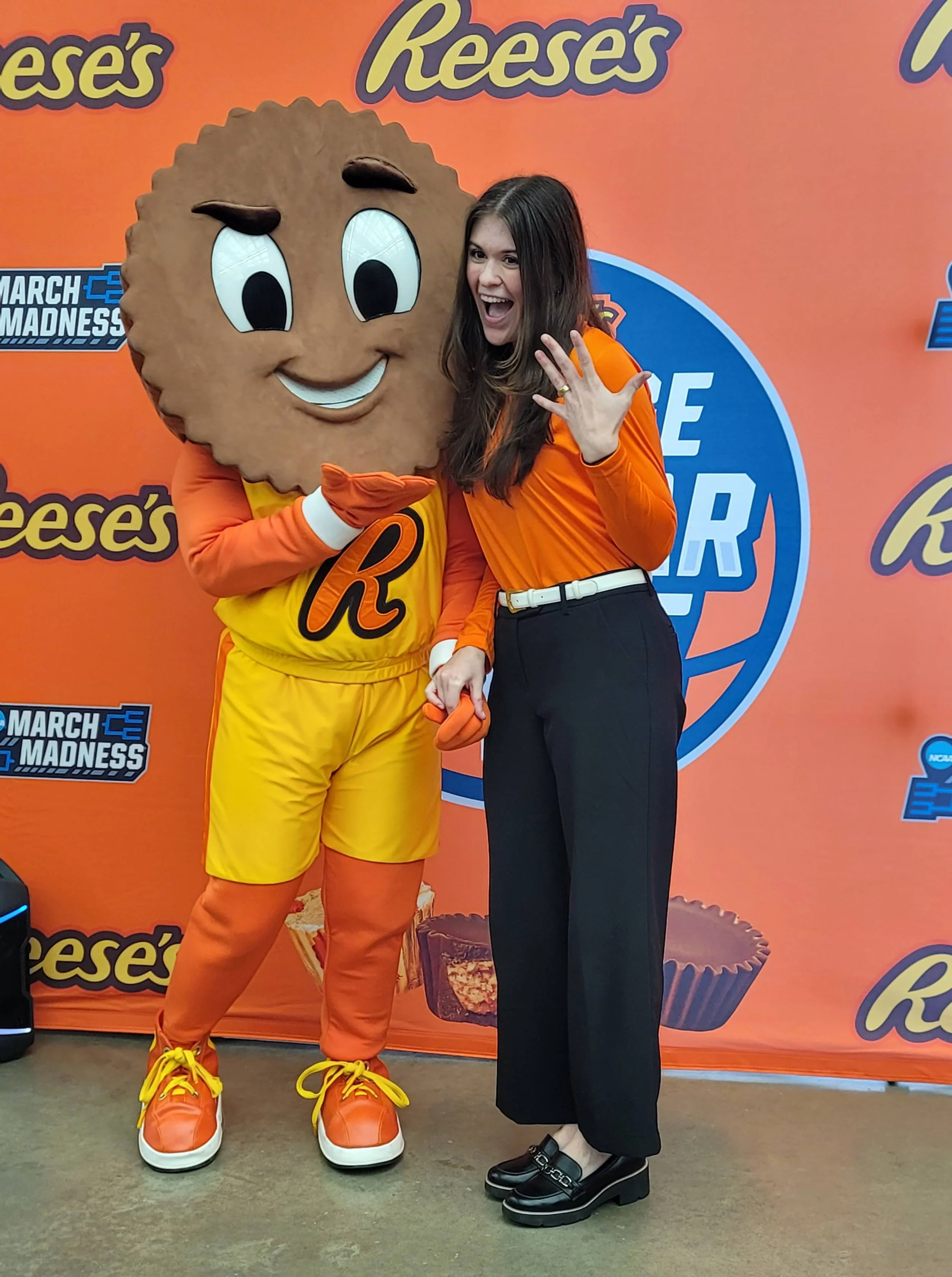
Costume character activation for Reese’s
A costumed character can change the energy of an event almost immediately. At a holiday retail promotion, a family festival, or a busy trade show, people notice the character before they notice most signage. Because of a costume character, consumers are more prone to stop for photos, bring friends over, and often become more open to speaking with the brand.
Turning that attention into a positive brand experience takes proper planning. A successful character appearance is not about merely finding a mascot for hire and sending them into the crowd. They are a performer that needs the right costume, a trained handler, scheduled breaks, and a clear plan for transport, storage, cleaning, and guest interaction. Encore Nationwide supports brands and event producers with costumed characters, performers, handlers, and event staff for programs across the country.
Where Costumed Characters Work Best
Costumed characters can work in almost any event environment where a brand wants to create a visible point of engagement. They are especially effective when guests are moving through a busy space and need a simple reason to stop.
At a holiday retail event, a character can welcome families, support a photo opportunity, and help create a festive atmosphere around a store or shopping center. A handler can organize the line while other staff members guide guests, answer questions, distribute promotional items, or direct them toward a product display.
Festivals offer a different type of opportunity. The character may move through the event, appear near a sponsor activation, or remain at a dedicated photo area. Because festivals can become crowded quickly, the performer should not be expected to manage guest interaction alone. A handler and nearby event staff can help maintain clear walkways and prevent the activation from disrupting surrounding vendors or attractions.
Trade shows also benefit from costumed character performers when exhibitors need to stand out in a crowded hall. A character can draw attention from the aisle and make the booth easier to find. Once guests arrive, booth staff can introduce the product, collect leads, demonstrate an offering, or invite attendees to take part in another activity.
Characters can also support sporting events, fan experiences, grand openings, product launches, community events, and family-focused pop-ups. The strongest results usually come when the character has a clear role instead of simply appearing without a schedule. The role might be welcoming guests, posing for photos, leading people toward an activation, or creating a series of planned appearances throughout the day.
What a Character Performer Needs
Besides strong mascot performer requiring to wear a costume, they also need: stamina, confidence, body awareness, and the ability to communicate clearly through movement.
Many mascot costumes limit visibility and make ordinary movements more difficult. The performer may not be able to see the floor clearly, hear conversations easily, or use facial expressions to communicate with guests. A wave, turn, gesture, or change in posture must do more work than it would for a person speaking normally.
The costume must also fit properly. A headpiece that is too loose can affect balance and sightlines. Footwear that does not provide enough support can make walking difficult, while heavy padding can increase fatigue. Before the event, the performer should have an opportunity to understand how the costume moves and where its limitations are.
Training should cover how to enter and leave the event space, move through crowds, pose for photos, interact with children and adults, and respond to unexpected situations. A performer should also know how to communicate with the handler using agreed signals when they need a break or assistance.
Stamina is particularly important for outdoor festivals and long holiday programs. Walking, waving, dancing, and holding poses may look simple to guests, but those actions become physically demanding when repeated throughout an event day. An experienced performer understands how to stay engaging without using unnecessary movement or overexerting themselves.
Choosing the Right Character Format
The right character depends on the audience, venue, event schedule, and purpose of the appearance. A full mascot suit may be ideal for a family festival or sports activation, while a seasonal character may make more sense for a holiday retail event. A branded character with a strong visual identity may be more suitable for a trade show where the goal is to create recognition and attract people to a booth.
Think about how guests will interact with the character. If the main goal is photography, the character needs enough space to pose and a handler who can keep the line moving. If the character will move around the venue, the team needs to plan a route, identify potential obstacles, and decide where the performer can take breaks.
The character should also fit the brand’s tone. A playful mascot can work well for a family event, but the surrounding staff still need to understand how to introduce the character and connect the appearance to the wider campaign. The character should support the event objective rather than distract from it.
Handlers: Why Every Character Needs One
A costumed character should not work alone. The performer’s view may be restricted, and a busy event floor can change quickly when guests gather for photos or move closer to the character.
The handler acts as the performer’s eyes, safety support, and connection to the event team. They guide the character through crowds, watch for obstacles, and help prevent guests from getting too close to areas that could cause a trip or collision.
The handler also manages the guest experience. They can organize a photo queue, speak with parents, answer basic questions, and make sure people understand where to stand. At a trade show, the handler may direct guests toward the booth. At a festival, they may keep the character away from congested pathways. At a holiday retail event, they may help families prepare for a photo and ensure the line remains orderly.
Communication between the performer and handler should be agreed before the event. Simple signals can indicate that the performer needs a break, cannot see an obstacle, or wants to leave the area. The handler should also know how to contact the event manager if the schedule, crowd conditions, or venue access changes.
A handler helps preserve the character experience as well. They can coordinate entrances and exits so guests do not see the performer removing the costume or moving through a public area while out of character.
Rotation Schedules, Heat and Safety
A character appearance needs a proper rotation schedule. Even an experienced performer should not be expected to remain inside a restrictive costume for an entire shift without planned breaks.
The right schedule depends on the costume, weather, venue temperature, activity level, and length of the event. A performer at an indoor trade show may have different requirements from someone working outside at a summer festival. Holiday retail events can also create challenging conditions when the performer is working near entrances, heaters, crowded walkways, or long photo lines.
Plan shorter appearances around the moments when the character will have the most value. At a holiday event, that could include scheduled photo sessions, a store opening, a tree-lighting program, or a visit from a special guest. At a festival, the character may appear at set times rather than remaining on the floor continuously. At a trade show, appearances can be planned around peak traffic periods and important presentations.
The break space should be private, easy to reach, and suitable for the performer to recover. It should provide water, seating, ventilation or air conditioning, and enough room to remove the costume safely. Encore Nationwide’s costume character service includes: heat-management protocols, scheduled breaks, and wranglers to support performer safety and crowd management.
Guest safety matters just as much as performer safety. Handlers should watch for blocked walkways, uneven flooring, low ceilings, crowded photo areas, and children who may run toward the character. If the area becomes too congested, the team should pause the appearance or move the character to a safer location.
Working with the Event Team
A character is most effective when the surrounding staff understand how to support the appearance. The performer should not be treated as a separate attraction with no connection to the rest of the event.
At a holiday retail event, greeters can explain the photo process while the handler manages the line. At a festival, directional staff can help guests find the character without allowing the queue to block nearby activities. At a trade show, booth staff can take over the conversation after the character brings a guest to the exhibit.
This division of responsibilities keeps the performer focused on interaction. It also prevents the character from becoming responsible for tasks that require speaking, product explanation, lead capture, or crowd control.
As Encore Nationwide, we provide event staffing for roles such as greeters, registration staff, booth teams, directional staff, and general event operations. When these roles are planned together, the character becomes part of a functioning event team rather than a standalone visual attraction.
Costume Logistics: Shipping and Storage
A character costume needs the same planning as any other important event asset. It may be bulky, delicate, or difficult to transport, especially when it includes a large headpiece, footwear, accessories, internal supports, or cooling equipment.
Before the event, confirm where the costume will be delivered, who will receive it, and where it will be stored. The team should also know how the costume will travel from the storage area to the appearance location and who will have access to it backstage.
Shipping becomes more complicated when the program involves several cities or multiple event dates. A late delivery can affect the entire appearance, while poor storage can damage the costume before the performer puts it on. The logistics plan should include delivery timing, receiving instructions, packaging, return arrangements, and a process for handling missing or damaged components.
Our event logistics services include warehousing, shipping, receiving, and storage for event assets. The logistics team also supports event load-in, breakdown, and related operational requirements.
Cleaning and Costume Care
Costume care should be included in the event plan, particularly when a character appears several times in one day or works across multiple days. The inside of a costume can become warm during use, and the outer surface may come into contact with guests, floors, walls, and outdoor environments.
The team should clarify how the costume will be cleaned or sanitized between appearances and where it will dry or air out. Accessories should be checked regularly, and the performer or handler should report any loose seams, damaged fasteners, uncomfortable padding, or visibility problems before the next appearance.
Our costume character support includes sanitization between appearances. Planning this in advance helps protect the costume, supports performer comfort, and gives the brand a more consistent presentation throughout the event.
Booking for the Holiday Season
November and December dates become busy because many holiday programs take place within a short period. Tree lightings, parades, shopping-centre appearances, community events, office parties, and seasonal pop-ups may all require performers and handlers on the same weekends.
Book as early as possible if you need a particular character, multiple dates, several markets, dedicated handlers, or support with shipping and storage. Early planning also leaves time to confirm the venue, access points, break space, appearance schedule, and staffing requirements.
When requesting support, provide the event date, location, venue type, expected attendance, appearance hours, character requirements, and whether the program is indoors or outdoors. Explain whether the character will remain in one location, move through the venue, support a photo opportunity, or appear at specific scheduled moments.
For a holiday retail event, the plan may focus on queue management and repeat photo sessions. For a festival, it may need to account for outdoor conditions, crowd movement, and multiple activity areas. For a trade show, the focus may be booth traffic, appearance timing, and coordination with sales or lead-capture staff.
FAQ
How much does it cost to hire a costumed character?
The cost depends on the character, location, appearance length, number of performers and handlers, travel, costume requirements, and event logistics. Holiday dates, multiple markets, and programs that require shipping or storage may also involve additional planning.
Does a mascot performer need a handler?
Yes. A handler supports performer safety, guides the character through crowds, manages photo lines, monitors the surrounding area, coordinates breaks, and communicates with the event team. A handler is particularly important when the costume limits visibility, hearing, or mobility.
How long can a character performer stay in costume?
The safe appearance length varies according to the costume, venue conditions, temperature, physical activity, and performer comfort. Plan scheduled breaks with water and access to a private, cool space instead of treating the costume as an all-day shift.
How far ahead should I book a character for a holiday event?
Book as early as possible for November and December events. Early planning is especially important when you need a specific character, several performers, handlers, multiple appearances, or support with shipping and storage.
A character can create the moment guests remember, but the operational plan determines whether that moment runs smoothly.
