
Event Staff Workwear: What Your Event Team Should Wear (2027 Guide)
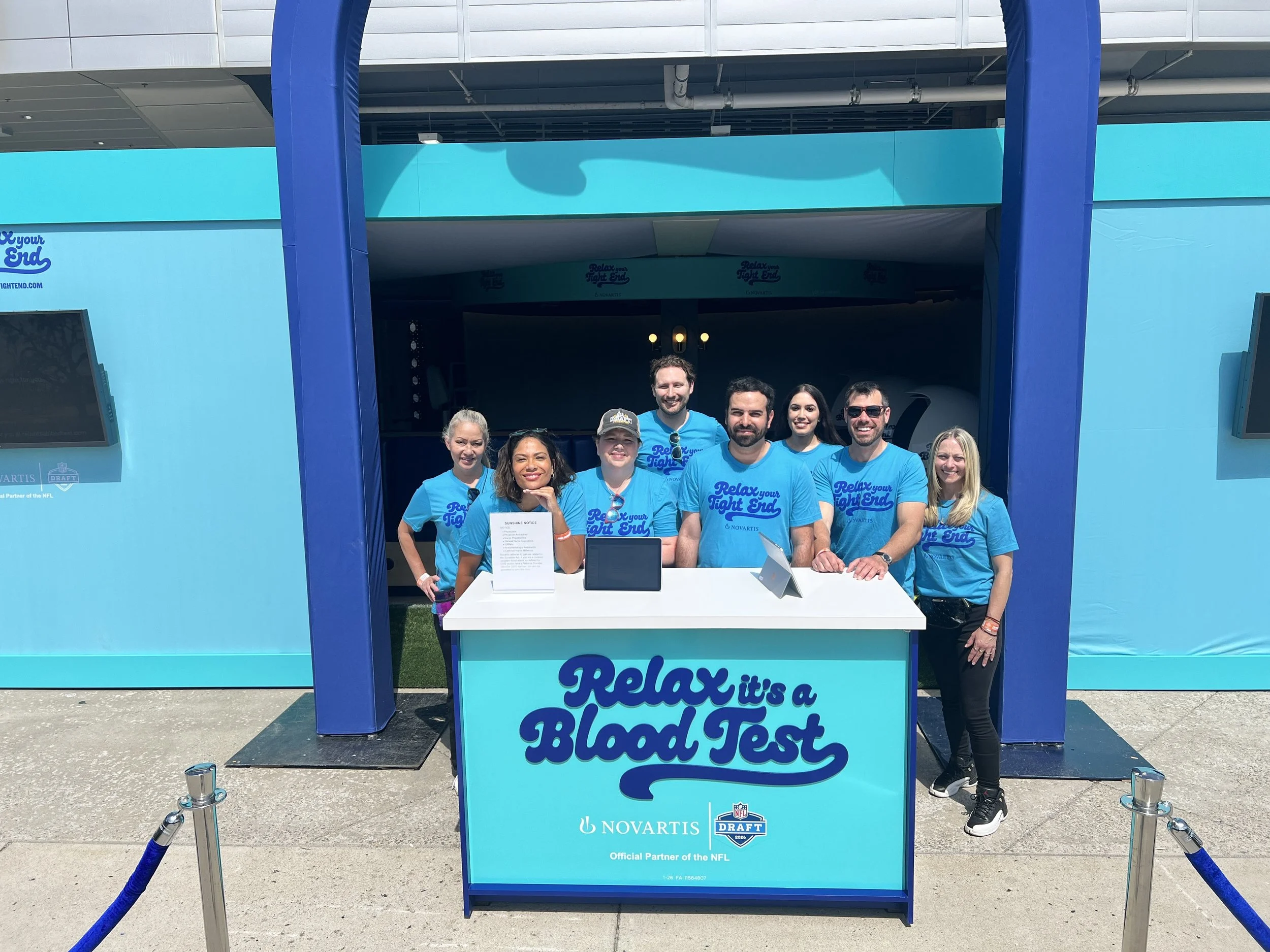
Our event staffing team supporting Novartis in Pennsylvania.
Event staff workwear should make your team easy to identify, comfortable throughout the shift and consistent with the experience you are creating. For brand marketers, conference organizers, trade show exhibitors and event producers, the right clothing also helps staff represent the brand with confidence. Thus, this guide covers event staff shirts, event staff uniforms, dress codes, sizing, footwear, weather planning and what a staffing partner can manage for you. If you are still building the wider team, start with Encore Nationwide’s event staffing services, which include brand ambassadors, conference staff, trade show staff, event managers and other event roles.
What Counts as Event Staff Workwear
Event staff workwear includes the clothing, footwear and accessories your team wears while working at an activation, conference, festival, trade show, tour, pop-up or other live event. It may be fully branded, partly branded or based on a neutral dress code.
The right choice depends on what staff will do and where they will work. A team welcoming guests at a trade show booth has different needs from registration staff, a product demonstrator, a street team or a crew member supporting load-in.
Start by considering the environment and the role. Will staff work indoors, outdoors or between several locations? Will they stand for long periods, walk across a large venue, lift items or move through crowds? Will they appear in photographs and videos? The answers will shape everything from the fabric and fit to the color and footwear.
A complete workwear plan should cover the main outfit, footwear, weather layers, accessories and backup items. It should also make clear what the client supplies, what staff provide themselves and what the staffing agency manages.
Event Staff Shirts
Event staff shirts are one of the easiest ways to create a coordinated team. Depending on the event, you might choose a branded T-shirt, polo, button-down shirt, vest or long-sleeve top.
A T-shirt may suit a casual activation, festival or sampling program. A polo or button-down shirt may work better at a conference, trade show or professional networking event. Long-sleeve shirts, branded jackets and approved outerwear can help staff stay comfortable at outdoor events or venues with changing temperatures.
The shirt should be comfortable enough for the full shift and visible enough for attendees to recognize. A small logo may look polished, but it may disappear in a crowded venue. If staff need to be found quickly, consider the logo size, color contrast and placement.
Always request a sample before ordering the full quantity. Check the fabric, fit, color, logo quality and appearance after washing. A shirt that looks good in a product photograph may feel too heavy, restrictive or warm once staff are standing and moving for several hours.
Workwear may also include branded caps, lanyards, pins, scarves, aprons or role-specific badges. These extras can help distinguish staff from attendees, but they should serve a clear purpose. The more pieces you add, the more items need to be ordered, distributed, stored and replaced.
Branded Uniforms vs. Neutral Dress Codes
Branded uniforms help attendees identify your team and understand who can assist them. A uniform does not have to mean a full head-to-toe outfit. It could be a branded event staff shirt worn with neutral trousers, dark jeans or another approved bottom.
Branded clothing is particularly useful when staff are representing one brand directly, working in a busy public space or supporting sampling, demonstrations, lead capture or product education. It also creates a consistent visual presence when the team appears in event photography or video.
Neutral clothing can be more appropriate when the event calls for a polished, understated appearance. Registration staff, hospitality teams, room monitors and conference support staff may look more natural in a simple black polo, dark trousers or another professional outfit.
The important point is to define neutral clearly. “Business casual” means different things to different people. A useful event staff dress code should explain the approved tops, bottoms, colors, footwear and outerwear. It should also state whether denim, visible logos, patterns, sneakers or shorts are permitted.
If staff will wear clothing they already own, provide examples. “Wear all black” could result in one person arriving in a smart black polo and another wearing athletic clothing. Both may believe they followed the instruction.
Match the Outfit to the Role
One event may need several versions of the same dress code. Registration staff might need a polished, welcoming look, while directional staff may need brighter shirts or more visible credentials. Product specialists may wear branded tops, while operations staff need practical clothing suitable for moving equipment.
You can keep the full team coordinated by using one shared element, such as a brand color, badge, cap or branded layer. Role differences can then be shown through shirt style, credential color or accessories.
For brand ambassadors, clothing is part of the interaction. Because they are representing the brand in conversations with consumers, the outfit should as a result: support the brand’s personality while allowing staff to move, speak and work comfortably.
Who Supplies and Pays for Uniforms
The client, staffing agency or both may supply event clothing. Settle this before recruitment begins and include the arrangement in the staffing brief.
A client will often supply custom event staff shirts, branded jackets, costumes, specialty clothing or accessories that need to follow specific brand guidelines. The staffing agency can help collect sizes, communicate the dress code, confirm that staff have the required items and coordinate distribution.
If staff are expected to provide neutral clothing, be specific about what they need. Confirm whether they must supply their own shoes, jackets, rainwear or personal grooming items. You should also explain what happens if an item is unavailable, damaged or unsuitable.
Do not assume that a staffing quote automatically includes uniforms. Ask whether the scope covers apparel, shipping, storage, fittings, alterations, cleaning, replacements and rush orders. If the client supplies the clothing, confirm who receives it and when it must be distributed.
This becomes especially important when staff are working across multiple cities. Clothing may need to be shipped to individual staff members, a local manager, a warehouse or the venue. Someone must own the tracking process.
A staffing partner can remove much of the administrative work. Our staff are W-2 employees of the company, and its event staffing team manages recruitment, briefing and placement as part of the staffing process. Learn more about how to hire event staff before finalizing your program.
Sizing, Fittings and Shipping to Staff
Sizing plays an important role in how event staff look and feel in their uniforms. Clothing that is too tight, too loose, too short or too warm can make a long event shift uncomfortable and distract staff from the guest experience.
Use the apparel supplier’s size chart instead of solely relying only on generic small, medium and large labels. Sizing varies between brands and garments, so request samples whenever possible. If you are ordering polos, jackets or fitted shirts, ask whether the supplier has different cuts or fit options.
Collect sizes early and give staff a clear deadline. Build a small reserve into the order, especially for the most common sizes. It is easier to solve a last-minute issue when you have spare shirts available than when the entire order is exactly matched to the original headcount.
For larger programs, keep a simple distribution record showing each staff member, market, role, garment, size and shipping status. Label items clearly and confirm that staff have received and inspected their clothing before the event. This gives you time to resolve incorrect sizes or missing items.
If staff will collect clothing on-site, schedule a proper distribution period. A fitting or exchange process is much easier when it happens during an early check-in or briefing rather than minutes before doors open.
A staffing agency can coordinate communication and readiness checks, but the client should still approve the final garment, artwork and delivery schedule. Apparel planning works best when it is treated as part of the event timeline rather than as a last-minute detail.
Dressing for Weather, Long Shifts and Safety
Comfort is an operational issue. Staff who are too hot, too cold or wearing painful shoes may find it harder to stay focused, approachable and energetic.
For outdoor programs, plan for the environment, not just the forecast. Staff may experience sun, wind, rain, cold mornings and hot afternoons during one shift. They may also move between shaded and exposed areas. Breathable fabrics, layers, approved outerwear and weather-appropriate footwear can make a significant difference.
A branded jacket may be useful in cold weather, but make sure it does not completely cover the logo or make the team difficult to identify. For warm events, choose lightweight materials and avoid garments that restrict movement. If staff need hats or sun protection, include those items in the dress code rather than leaving everyone to interpret the requirement independently.
Footwear needs clear instructions too. Staff may stand or walk for several hours, so shoes should be clean, secure and supportive. If the requirement is black shoes, explain whether clean black sneakers are acceptable. If staff will work on grass, concrete, gravel or uneven ground, tell them in advance.
Safety requirements should always take priority over appearance. Staff supporting load-in, load-out, vehicles or equipment may need different clothing from guest-facing teams. Follow venue and job-specific requirements, and ask a qualified professional about protective equipment when the work involves hazards.
It is also worth preparing for clothing problems during the event. A field manager can keep spare shirts, jackets or accessories available and make practical decisions if a garment becomes damaged or unsuitable.
Workwear Checklist by Event Type
The best event staff uniforms depend on the role, venue and working conditions. The following examples can help you build a starting point.
Trade shows and conferences
Trade show and conference staff usually need to look polished while remaining approachable. A branded polo, button-down shirt or coordinated neutral outfit can work well, especially when paired with comfortable professional footwear and a visible badge or lanyard.
Exhibit halls can also be cold, so consider an approved light layer. If the event includes registration, booth support and room monitoring, define whether each role has the same outfit or a slightly different version.
Festivals and outdoor activations
Festival and outdoor activation teams need clothing that supports movement and changing weather. Breathable branded shirts, comfortable closed-toe shoes and approved hats or weather layers may be appropriate.
Make sure staff know where to take breaks, how to access water and what to do if the weather changes. Spare shirts and outerwear can be particularly useful when the program runs for several days or involves repeated contact with the public.
Pop-ups and retail experiences
Pop-up and retail teams need a coordinated appearance that supports customer interaction. Branded shirts, polos or accessories may work well, provided staff can stand comfortably and move around the space.
Encore’s work for the Zumba conference and pop-up program shows the level of coordination that large retail experiences may require. The program included managers, sales associates, registration staff, directional staff and room monitors, with more than 300 staff secured in each market. Encore onboarded the staff and processed payroll, while the team supported 35,000-square-foot Zumbawear pop-up retail stores at conference events. Read the Zumba case study.
Tours and multi-city programs
Tour programs need workwear that can travel, withstand repeated use and remain consistent across locations. Branded shirts, durable outerwear and a clear replacement plan are more useful than garments that are difficult to wash, store or reorder.
Before the first stop, decide who manages cleaning, storage, replacement and redistribution. A size and inventory record can prevent a small apparel problem from following the team from one city to the next.
Registration and guest services
Registration teams are often the first human contact guests have with an event. Their clothing should look organized and welcoming while allowing them to use scanners, tablets and other event tools.
A polished branded or neutral top, comfortable footwear, a visible name badge and an approved venue layer are often enough. The most important part is consistency: guests should be able to recognize the team immediately and know whom to approach for help.
FAQ
What should event staff wear?
Event staff should wear clothing that matches the brand, role and event environment. This may be a branded T-shirt, polo, button-down shirt, vest or coordinated neutral outfit with approved footwear. The dress code should also cover weather layers, grooming, accessories, visible logos and safety requirements.
Should event staff wear branded shirts?
Branded shirts are useful when staff need to be recognized quickly or represent one brand directly. They are common for activations, festivals, sampling programs, pop-ups and trade show booths. For conferences or hospitality roles, a neutral or more formal dress code may be a better fit.
Who provides event staff uniforms?
The client, staffing agency or both may provide uniforms. The client often supplies custom branded apparel, while the staffing agency may collect sizes, communicate the dress code, confirm readiness and coordinate distribution. Confirm responsibility for apparel, shipping, exchanges and replacements before the event.
How do you make event staff uniforms comfortable?
Choose breathable or layered fabrics, request samples, collect accurate sizes and select supportive footwear. Plan for the venue, weather and shift length. Provide clear break instructions and keep spare garments available for damaged or incorrect items.
Staff Your Next Event
Your event staff workwear should help attendees identify your team, understand their roles and feel confident approaching them. It should also allow staff to stay comfortable and professional throughout the shift.
Encore Nationwide has supported programs ranging from brand activations to large conference operations. Whether you need staff in one market or across multiple locations, staff your next event with a partner that can help manage recruitment, briefing and event-day staffing.
