
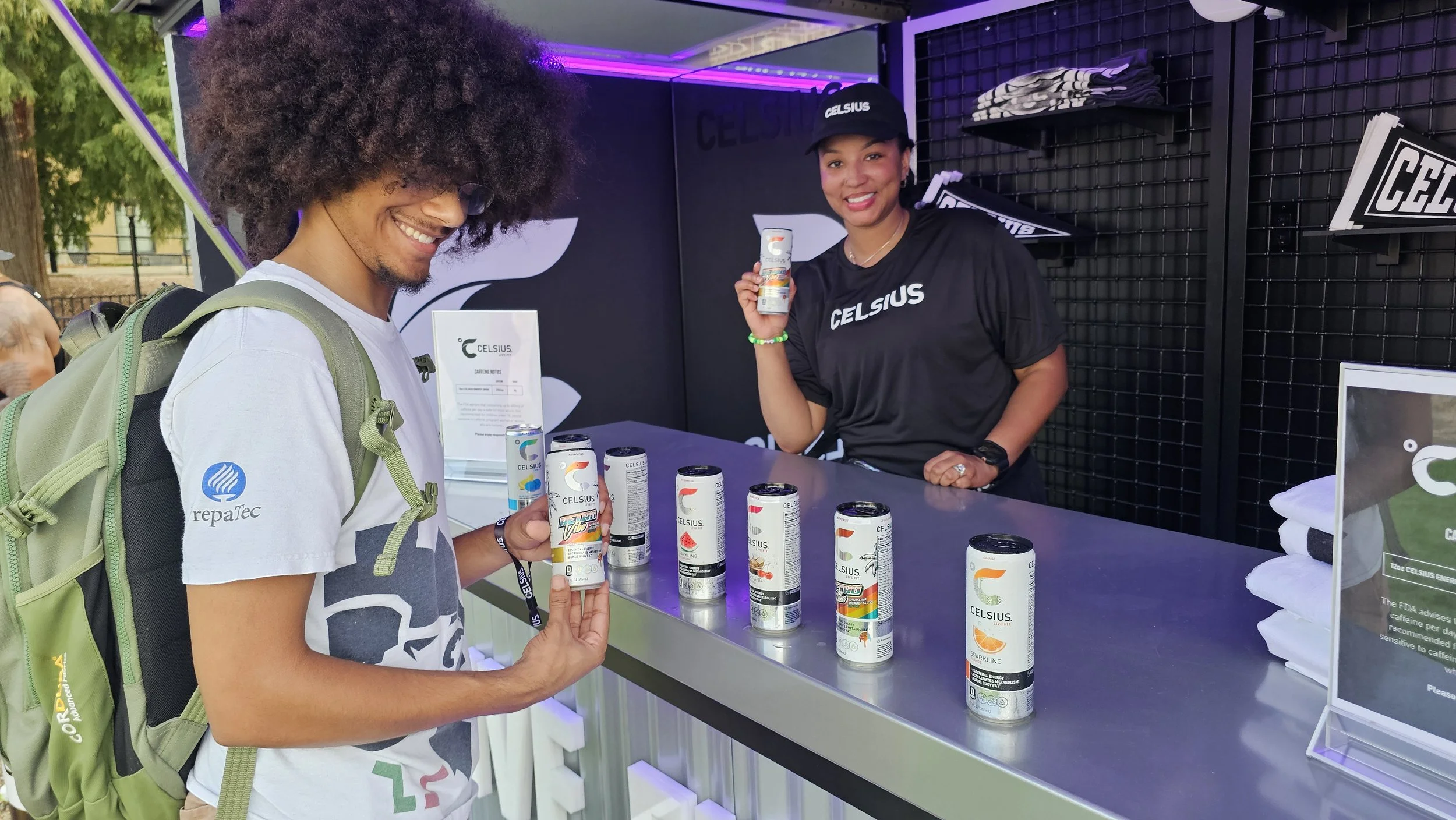
Human faces are the ultimate attention magnet in experiential marketing. Our brains are wired to spot faces faster than any other visual, processing them in milliseconds. This means activations featuring faces stop people in their tracks far more effectively than abstract graphics, product-only displays, or text-heavy signage.
The challenge is using faces strategically rather than as decoration. A poorly chosen expression or gaze direction can pull attention away from your product or message. Get it right, and faces become a powerful tool for guiding attention, transferring emotion, and driving engagement. Here are six tactics rooted in psychology and eye-tracking research that make attendees stop, look, and engage.
1. Use Averted Gaze to Guide Attention to Your Product
When a face looks directly at the camera, attention tends to lock onto the face itself. When that same face looks toward a product, text, or call-to-action, viewer attention follows. Eye-tracking studies show that gaze direction acts as a ranking factor for attention. Models looking at the product increase dwell time on that product and lift purchase intent compared to faces staring straight ahead.
In experiential design, this means placing large-scale imagery where the model's eyes point toward your key message, demo station, or QR code. A mural of someone reaching for a product while gazing at it will outperform a portrait of someone smiling at the viewer when the goal is product focus.
2. Match Expression Intensity to Context and Brand Positioning
Smiles are not universally persuasive. Research from 2025 found that big, intense smiles can backfire in certain contexts, especially for premium or luxury positioning where neutrality or subtle confidence performs better. The effect of a smile also depends on gaze direction. Neutral expressions paired with direct gaze tend to feel more authoritative and impactful than the same expression with averted eyes.
For mass-market, playful activations, warm smiles with approachable energy work well. For high-end or tech-forward experiences, consider composed expressions with slight confidence cues. The key is congruence between expression, gaze, and brand tone.
3. Leverage Pareidolia and Face-Like Patterns for Instant Recognition
Faces capture attention faster than other stimuli, but so do face-like patterns. Pareidolia, the tendency to see faces in objects, can be used to create instant visual hooks. Think of product arrangements that resemble eyes and a mouth, lighting setups that create face-like shadows, or installations where architectural elements suggest a face.
Ads featuring human faces and pareidolian images attract greater attention and preference in short exposure windows, often under three seconds. In fast-moving environments like festivals or street teams, this split-second advantage can be the difference between a glance and a stop.
4. Use Animated or Dynamic Faces to Increase Dwell Time
Animated faces hold attention longer than static ones. Studies on banner ads show that when a face moves, blinks, or shifts expression, dwell time increases significantly compared to still imagery. In experiential settings, this translates to digital screens with subtle motion, projection-mapped faces that react to movement, or live performers whose expressions change as guests approach.
Even small animations, like a model on a screen turning to look at a product as someone walks by, can double the likelihood of attention shifting to the advertised item. Motion adds a layer of novelty that keeps the brain engaged beyond the initial orienting response.
5. Design for Emotional Priming Through Expression Transfer
People unconsciously mimic the expressions they see, a process tied to mirror neurons. When attendees view a happy face, their own facial muscles activate in a way that primes positive emotion. This emotional transfer influences how they evaluate the brand and the experience.
Use this by placing expressive faces at key decision points: entry arches, product demo stations, or checkout zones. A wall of genuine joy or curiosity can lift the overall mood of the space and make guests more receptive to messaging. Avoid mixed signals, such as excited expressions paired with serious or complex copy, which can create cognitive dissonance.
6. Prioritize Diverse, Relatable Faces to Broaden Connection
Faces work best when attendees see themselves reflected in the experience. Diverse representation across age, ethnicity, body type, and style increases the likelihood that different audience segments will feel seen and connected. This is especially important in open-field activations where traffic is transient and first impressions matter.
Relatability also extends to context. Faces should feel appropriate for the setting and audience. A Gen Z-focused activation benefits from authentic, unpolished expressions that mirror TikTok aesthetics. A B2B trade show may respond better to composed, professional imagery that signals credibility.
Putting It All Together in Activation Design
Start by mapping where attention needs to flow. Use large-scale faces with averted gaze to point toward products or key messages. Match expression intensity to your brand positioning and the emotional tone you want to set. Layer in motion where possible to extend dwell time. Use emotional priming strategically at entry and conversion points. Ensure representation feels authentic and inclusive.
In controlled environments like pop-ups or brand houses, you can test different combinations and measure dwell time, sentiment, and conversion. In open-field settings, focus on high-impact visuals that work in under three seconds and staff the space to reinforce the intended emotional tone.
The Bottom Line for Experiential Teams
Faces are not decoration. They are a psychological tool that, when used with intention, can dramatically improve stop rate, dwell time, and engagement. The brands that win will treat facial imagery as a core part of activation design, not an afterthought. They will choose expressions, gaze directions, and formats based on what the brain responds to, not just what looks good in a mockup. And they will walk away from each event with clearer evidence of what made people stop, look, and engage.
